Maths is everywhere in our lives, whether the purchase at the shops or giving out medicine. And this means it is in our child’s lives, too.
But the question is, do our children notice it?
Numbers appear on digital devices, signs, packaging, shop prices, objects, routines and conversations. These everyday moments help children understand that numbers have meaning and purpose.
Research shows that early numeracy approaches typically increase children’s learning by about seven months, and can help children from disadvantaged backgrounds to catch up with their friends by the beginning of formal schooling.
So how can we help our children achieve the best outcomes through math in the Early Years?
There are three mathematical concepts that are crucial to pre-school years:
- Counting
- Cardinality: To understand that when counting, the last number represents the total number (e.g. 1, 2, 3 ducks therefore there are three ducks in total).
- Success factors: A child may be able to count to 10. They have recognised there are 5 apples. When one more is added, they can answer that there are now six.
From age 3 onwards, there are a few suggestions we can easily incorporate without adding extra burden into busy parent and family life. Through daily experiences, conversations and play can be enhanced with the following suggestions:
- Number spotting – throughout the day, encourage your child to point out numbers they see during the day. Encourage their curiosity about what the number represents
- Support understanding numbers in context, by looking at signs around them that indicate their meaning (e.g. £, . – ∘C ml)
- Using language to represent quantity and supporting it with gesture such as more, less, bigger, smaller, shorter, longer, first, next, before and after.
- Follow your child’s interest – Learning is more meaningful when activities are based on what children already notice and enjoy. They can draw from their own awareness of numbers and symbols, and we can support them to build on that.
- In play and daily life, encourage spotting of patterns, ask open questions to promote problem solving (e.g. what can we do next?)
- When children provide answers that may be incorrect, ask them to explain how they reached that answer, rather than correcting them (e.g. “why do you think that?? “What made you do that?”
Maths and Supporting SEND
At all ages, malleable and manipulative is valuable. Use physical, sensory experiences to understand concepts such as spatial reasoning, counting, cardinality.
More hands-on learning, Understanding children’s individuals needs and strengths, Smaller achievable steps and Time to learn at their own pace.
Supporting families-
Parents can be encouraged to join in and see everyday routines as opportunities for maths learning. Simple activities at home can build children’s confidence. There could be married for some families for example, Time, awareness, confidence or being unsure on how to support maths. By introducing Small steps and examples it can make it easier for them to take part.
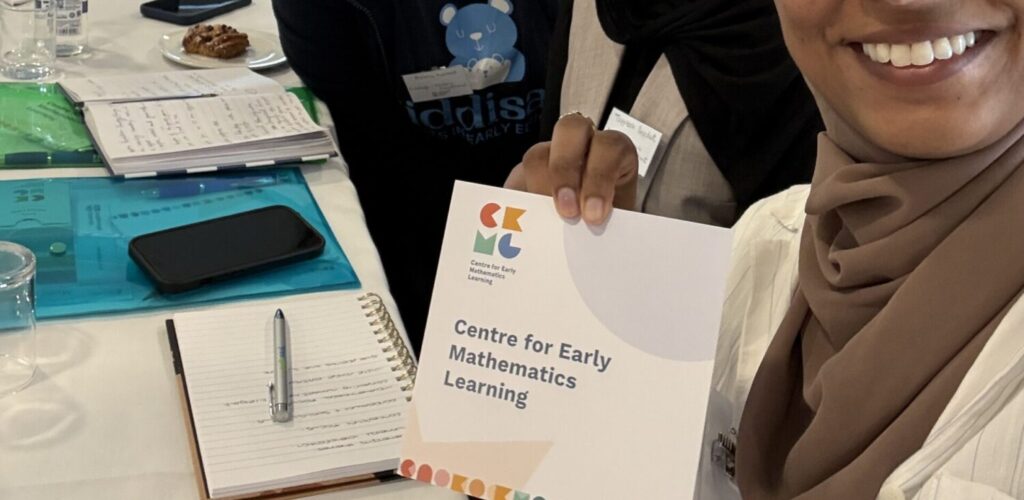
Overall, the training highlighted that early maths does not need to be formal or difficult. It can be built naturally into play, routines, conversations and real-life experiences.