Communication Friendly Setting
An environment which supports the communication and language development of all children.
Elklan CFS Status
Elklan is a nationally recognised training provider focused on language development for 3-4 year olds.
We achieved Elklan ‘Communication Friendly Setting’ status in November 2025 at Coleman Road, following one of our dedicated practitioners, Victoria, attending the ‘Communication Counts’ training programme over 9 months. Victoria cascaded her knowledge and learning every few weeks to the entire team, who participated through training sessions, activities and practicing new strategies that have since been implemented long-term.
Strategies include
We support children’s communication development by:
- 10 second rule
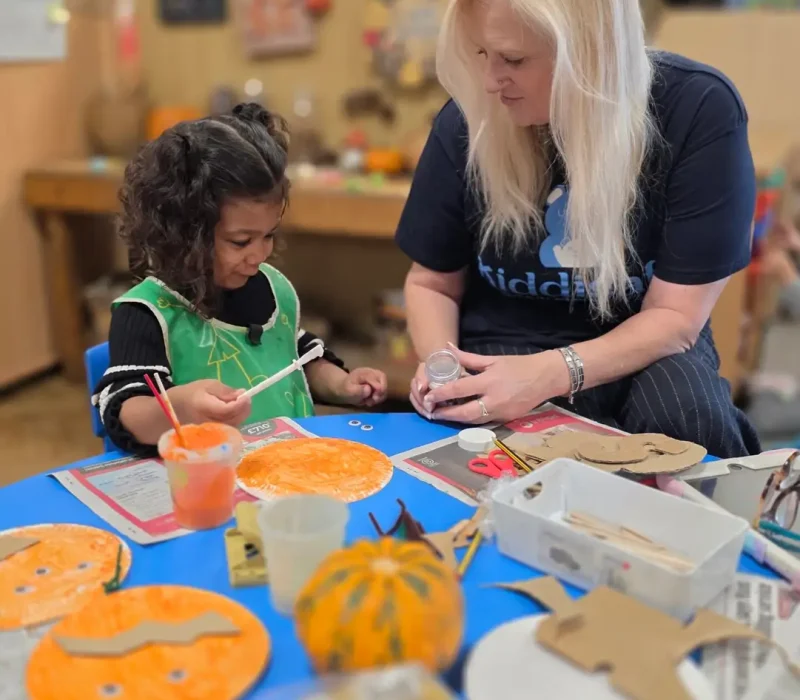
- Narrating play
- Multi-sensory activities
- Vocabulary flower
- Clever questions
Parents are encouraged to get on board and join us in developing children’s understanding and ability to use communication and language. See below for some more strategies that are easily doable with a little practice!
Helping understand spoken language
- Gain the child’s attention before speaking to them.
- Use gesture wherever possible and link your language with what the child is doing.
- Keep language simple – know what the child can understand.
- Talk about the here and now.
- Pause between sentences to give the child time to work out what you are saying.
- Remember: When a child is upset, their ability to understand can be reduced significantly. Stop, comfort the child and try again when calmer.
Encouraging children to talk
- Give children a reason to communicate e.g. Placing their water bottle out of reach to encourage them to ask you for it.
- Talk about what the child is looking at / doing.
- Modelling helps to show children how to use words in sentences.
- Repeat back what the child says correctly - but do not tell them that what they have said is 'wrong'
- Add one or two extra words when repeating what the child has said e.g. child says 'car', you repeat 'big blue car'
-
Clever questions to encourage thinking and extending learning, to talk more about what they are doing/thinking about e.g. open ended questions such as: Who?
What?
Where?
Later on they will begin to understand:
When?
Why?
How? - Woodworking: Real tools and materials to tinker, construct, and explore weight, balance, strength, and texture